
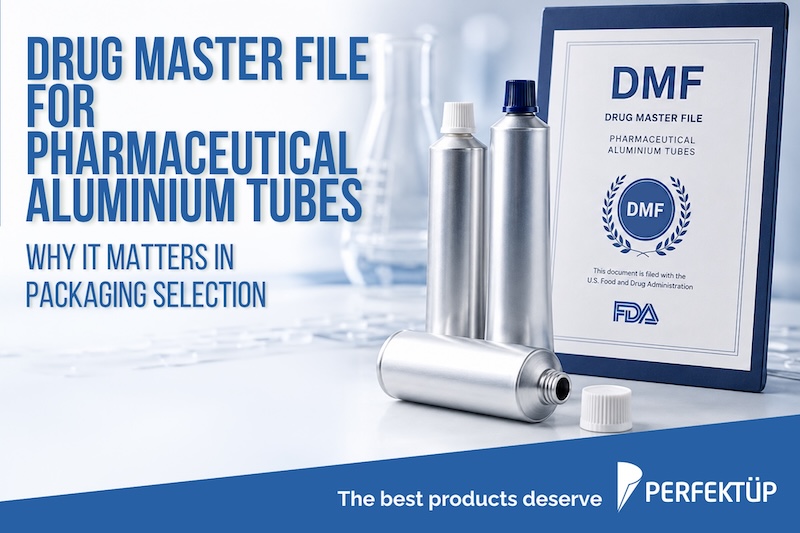
In pharmaceutical packaging, choosing the right tube is not only a matter of material, format or design. It is also a matter of documentation, regulatory readiness and long-term reliability.
For pharmaceutical companies, packaging components can play a critical role in protecting the formulation, supporting product stability and meeting the expectations of regulated markets. This is why technical documentation has become an essential part of packaging selection, especially when the product is intended for highly controlled applications.
Perfektüp holds a Certificate of Drug Master File (DMF) for pharmaceutical aluminium tubes, confirming its ability to support customers with the level of technical and regulatory documentation required in the pharmaceutical sector.
What Is a Drug Master File – DMF?
A Drug Master File, commonly known as a DMF, is a confidential technical document submitted to the U.S. Food and Drug Administration, commonly known as FDA. It contains detailed information about facilities, processes, materials, components or articles used in the manufacturing, processing, packaging or storing of drug products.
The purpose of a DMF is to allow regulatory authorities to access relevant technical information without requiring the supplier to disclose confidential or proprietary details directly to every customer.
In practice, this means that a pharmaceutical company can refer to a supplier’s DMF in its own regulatory submission, while the supplier maintains control over sensitive technical information.
Type III DMF: The Role of Packaging Materials
DMFs are divided into different types according to their subject. For pharmaceutical packaging, the relevant category is the Type III Drug Master File, which refers specifically to packaging materials.
A Type III DMF may include information related to the intended use of the packaging material, its components, composition, manufacturing controls, acceptance specifications and supporting data regarding its suitability for pharmaceutical applications.
For aluminium tubes, this type of documentation can be particularly relevant because the packaging is often in direct contact with the formulation. The inner coating, the aluminium structure, the closure system and the manufacturing process all contribute to the overall performance of the container.
In regulated sectors, these details matter. Pharmaceutical companies need packaging partners that understand not only production, but also the documentation requirements behind product approval, stability studies and market access.
Why DMF Documentation Matters for Pharmaceutical Companies
For a pharmaceutical company, selecting a packaging supplier is a strategic decision. The packaging must protect the product, support compliance and reduce potential risks during the regulatory process.
A DMF can help simplify and support this process by making key technical information available to the regulatory authority through an established documentation pathway. This can be valuable when preparing applications, managing product lifecycle documentation or working across markets where regulatory expectations are particularly strict.
For pharmaceutical companies targeting the U.S. market, this documentation can be especially important. Thanks to its Type III Drug Master File for pharmaceutical aluminium tubes, Perfektüp is able to support the supply of aluminium tubes for pharmaceutical products intended for the United States, providing customers with the technical documentation required to reference the packaging component within FDA-related regulatory submissions.
The presence of a DMF also signals that the packaging supplier is familiar with the level of technical detail expected in pharmaceutical environments. It reflects a structured approach to documentation, traceability and quality management.
For customers, this can translate into greater confidence when evaluating a packaging component for pharmaceutical use.
Aluminium Tubes in Pharmaceutical Packaging
Aluminium tubes are widely used in pharmaceutical packaging because they offer strong protective properties. They provide a total barrier against light, air and external contamination, helping to preserve sensitive formulations over time.
Their collapsible structure also supports hygienic use: once the tube is squeezed, it does not easily draw air back into the pack. This makes aluminium tubes particularly suitable for ointments, creams, gels and other semi-solid pharmaceutical products that require protection throughout their shelf life.
In addition, aluminium tubes can be sealed, fitted with different closures and adapted to specific dosage and dispensing needs. This combination of protection, functionality and customisation explains why aluminium remains a trusted material in pharmaceutical tube packaging.
Perfektüp’s Experience in Pharmaceutical Aluminium Tubes
Perfektüp has long-standing experience in the production of collapsible aluminium tubes for high standards sectors, including pharmaceuticals. The company’s aluminium tube solutions are designed to combine product protection, technical performance and customisation possibilities.
The company’s production processes are managed under a quality control system and supported by advanced ERP and inspection technologies. Aluminium tubes are produced with continuous controls, including 100% hole section control, helping ensure consistency and reliability in the final packaging component.
This technical background is particularly important for pharmaceutical customers, where every detail of the packaging system can have an impact on quality, safety and regulatory documentation.
Within the Perfektüp Group, Tubettificio Perfektüp is entirely dedicated to pharmaceutical aluminium tubes. Located near Milan, in one of Europe’s most important pharmaceutical regions, it has an historical tradition in Pharma packaging, alongside many international pharmaceutical companies, with a special focus on ophthalmic packaging solutions.
The Value of a Packaging Partner with Strong Documentation Capabilities
In pharmaceutical packaging, documentation is not an accessory. It is part of the product development and approval process.
Working with a packaging partner that holds a DMF and understands the expectations of regulated sectors can help pharmaceutical companies manage projects more efficiently. It supports clearer communication between technical, quality and regulatory teams and can reduce complexity when packaging information is needed for submissions or internal assessments.
A strong packaging partner should be able to provide not only the physical component, but also the technical support behind it: specifications, documentation, quality controls, material knowledge and experience with pharmaceutical requirements.
This is where Perfektüp’s expertise becomes a key advantage. Its DMF certificate reflects a broader commitment to serving the pharmaceutical market with reliable aluminium tube solutions and the documentation capabilities that regulated customers need.
Choosing Pharmaceutical Aluminium Tubes with Confidence
For pharmaceutical companies, the right packaging choice must balance protection, functionality, compliance and supply reliability. A Drug Master File adds another important element to this decision: documented technical readiness.
Perfektüp’s DMF certificate for pharmaceutical aluminium tubes reinforces its position as a trusted partner for companies operating in regulated sectors. With strong experience in aluminium tube manufacturing, dedicated pharmaceutical production capabilities and a documentation-oriented approach, Perfektüp supports customers from packaging selection to technical project development.
In a market where quality, compliance and reliability are essential, choosing a packaging partner with DMF documentation can make a meaningful difference.
Are you looking for pharmaceutical aluminium tubes supported by strong technical and documentation capabilities? Contact Perfektüp to discuss your next packaging project.